CES Brings New Cameras

As expected, CES has brought quite a few new camera announcements. Two small cameras, are of interest to me in particular, especially since I recently bought the Nikon V1: Canon’s new mirrorless camera, the PowerShot G1 X, and Fuji’s interchangeable lens follow-on to the X100, the X-Pro1.

The PowerShot G1 X looks to be an evolution of the G-series with one very important change: the sensor size, which is now just shy of APS-C size. The G-series cameras have always had nice image quality, despite their small sensors. I’ve owned several of the G1 X’s predecessors, before switching to the Panasonic GF1 when it was released.

When I saw the headline announcing that the newly redesigned PowerShot was going to have a much bigger sensor, I thought briefly that I was going to regret the V1. Then I looked at a picture of the G1 X and knew that I wouldn’t; its viewfinder is the same kind of tiny optical finder that was so terrible on the previous G cameras. Too bad, because Canon could be the one to rock the enthusiast small camera market if they tried. But I won’t buy another camera without a first-class viewfinder. I’m sure it’ll make lovely images, though.

The Fuji looks much more promising. I loved the feel of the X100 when I briefly had one, and the X-Pro1 looks like it could be great too. The lenses look like what I’d hope for, especially the 35mm f/1.4. The hybrid viewfinder on the X100 was wonderful, and hopefully a year brings even more refinement to this part of the new camera. But I can’t bring myself to pre-order the beast, since I just don’t trust Fuji to have re-done the autofocus system into something great so quickly.

There were two big issues I had with the X100: AF was slow and inaccurate, and it had two modes, one for close-range and one for farther out. It wasn’t super simple to switch between those two modes, and it was constantly necessary, in my experience. It was hard to tell, when I was on the cusp of having to switch to close-focus mode, when I’d have to switch or if the camera was just having its normal difficulties focusing. Hopefully Fuji have made strides in the department, but to have completely gone from the buggy, hard-to-use AF of the X100 to something as seamless as the V1′s AF in one year would be near-miraculous. Maybe they have and I’ll wish pre-ordered one, but I just can’t.

On the big camera front, Nikon introduced the D4, which looks like the rightful heir to the top-of-the-line pro camera line-up. At $6k, I’m not in the market, but it sure does look pretty nice, especially for pros who are doing serious video work; it’s nice to see Nikon not let Canon run away here. But in my case, I don’t care about video in my DSLR. I’d rather keep the innovation on the still camera side of the equation, and that seems relatively stagnant where Nikon and Canon are concerned. Fine with me. I don’t want to feel like I need to spend that kind of money anyway.

Nikon also introduced the 85mm f/1.8 lens, which might just find its way into my bag. I’ve never been able to justify the cost of the f/1.4 model, but this cheaper addition might just be the ticket. I’ll wait and see what the images it produces look like before deciding if I need another lens for the big camera.

Nikon 1 Accessories

I was really intrigued by the accessories that Nikon showed off at the introduction of the Nikon 1-series. They released several of them at or near the launch of the cameras, and I’ve acquired a few: the SB-N5 Speedlight, the GP-N100 GPS unit, and the FT-1 mount adapter. They really add quite a lot of fun to the camera.

SB-N5 Speedlight

The SB-N5 is a really, really tiny speedlight, with a head that swivels 360° around and also 90° up. This allows for bouncing the flash off of ceilings and walls in order to make more natural looking flash-lit pictures. The flash is powered from the camera itself, which helped keep the unit so small, and it makes the combined camera and flash light. Like most of the Nikon 1 line, it’s expensive for what it is, but I’ve had a blast with it.

I spent some of the holiday season with my family and friends, and had many occasions to use the V1 with the SB-N5 attached. Bounced, it really helps offset the dreadfully slow lenses in darker indoor settings, and I was pleased with the results I was seeing. One location, was particularly large and dark on one side of the room and brightly window lit on the other, and I wanted to use off-camera flashes to help light the environment. I had two Nikon SB-900 speedlights with me, so this should have been no problem.
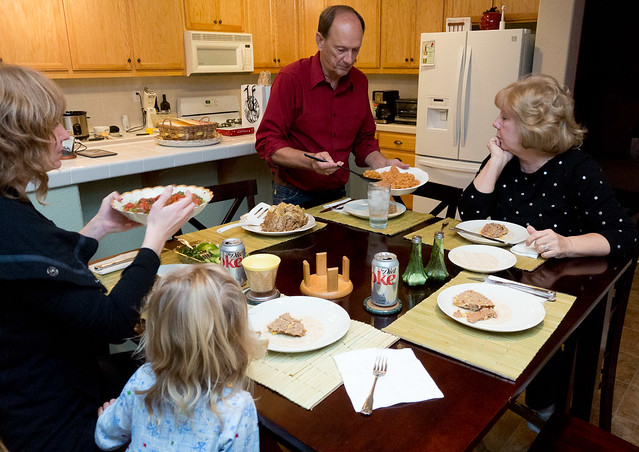
Christmas Eve Dinner

The SB-N5, unfortunately, isn’t compatible with Nikon’s Creative Lighting System (CLS), which allows a camera to control the settings of remote flashes and trigger them (called “acting as a Commander” in CLS parlance). This is really too bad, since this feature would really have made the SB-N5 worth the $150. Maybe they’ll release a separate Commander unit, although I doubt it, given the limitations they’ve imposed on these cameras to appeal to a certain market. In any case, I set up the SB-900s in “SU-4″ mode, which enables them to be triggered by any other flash, the SB-N5 included. This, of course, precluded using TTL flash for the 900s, but that worked out fine. Check out some of the images here.

One negative I’d note is that metering with the SB-N5 directly lighting a subject tends to overexpose. TTL should ensure a decent exposure, even if on-camera flash is usually harsh and unforgiving. I found that the V1 usually hit the subject with far too much light, blowing out the subject when I tried this. Luckily, I don’t shoot this way often, and I’ll certainly avoid it even more knowing this. The V1 does allow for flash exposure compensation to be dialed in, something that was a pleasant surprise given how Nikon chose to keep most controls that an ‘enthusiast’ would want to a minimum. I’ll take what I can get though! It was pretty easy to dial in -1.7 stops or so and use the SB-N5 as a fill flash.

Overall, the SB-N5 is a good addition to the Nikon 1 lineup, and I’m glad to have it. I’m very happy that it’s a separate, more capable unit compared to whatever they might have done to cram a flash in to the V1′s body. It’s not a powerful flash unit, but it’s better than built-in, and the ability to bounce is greatly appreciated.

GP-N100 GPS Unit

The GP-N100 adds what I wish was built-in to the V1 (and every other camera from here on out, for that matter): a GPS receiver. When attached to the accessory port on the V1, the camera adds GPS information about the location of each shot to the EXIF data for that image. This is fun and just plain useful. Given that they can cram such a thing into just about every phone made, it feels usurious to have to have the relatively big, expensive unit glommed on to the outside of the camera. That said, it’s worth it to me for this camera, since it’s my walkaround camera and the one in intend to take mountain biking with me most often. My current process of using a Lightroom plugin to match up my GPS track from the bike to the camera using timestamp information feels like a painful hack.

The unit takes a few seconds to lock on to the GPS signal when the camera is first powered up and it keeps track of where you are for up to three hours after the camera is powered down, as long as it stays on the camera; like the other accessories, it’s powered by the camera and doesn’t have its own batteries. Its ‘interface’ consists of a light that blinks red when it’s trying to obtain a lock, and green when it has one. There is also a ”GPS” indicator on the LCD/viewfinder when it has a lock. Easy.

FT-1 Mount Adapter

I’ve saved perhaps the best for last. This small, light adapter allows certain Nikon F-mount lenses to be mounted on the 1-series cameras. When attached, most things work: AF-S lenses can autofocus, VR works, and the camera can use whatever data the lens sends to it. Some lenses can work on the camera, but only in manual focus. There are some limitations, such as only being able to use the center focus point, but there’s only one I really find disappointing: the camera can only focus in AF-S. That means no tracking of moving subjects. I’m not sure what the reason is for this limitation, but I really hope they find a way to remove it. There was a new firmware update for the camera to enable the use of the FT-1, and I hope that a future update will enable AF-C continuous focus.

In any case, mounting high-quality optics really shows what this camera will be capable of when the lens line-up matures. Mounting sharp lenses like the 50mm f/1.4 or the 28-70mm f/2.8 really shows off the V1′s speed. It’s truly impressive to get the 70-200mm f/2.8 on there and see the V1 drive it super-quickly and have the VR do such a wonderful job. I even tested my Zeiss ZF 35mm f/2 and it worked well. In fact, it’s actually easier to manual focus indoors on the V1 than on my D700 because the electronic viewfinder on the V1 is brightened up beyond room brightness. When a manual focus lens like the Zeiss is mounted, or manual focus mode on G-series lenses is enabled, hitting the “OK” button zooms the screen or EVF in to assist in focusing, but I found that the EVF was sharp enough that I could manually focus well. That’s a big win over the Panasonic GF-1 I used prior to owning the V1; I could never effectively focus that damn thing manually with that viewfinder. The only “lens” I have that didn’t really work is the original Lensbaby. That wouldn’t make too much sense on the V1 anyway, since taking only the center of the image circle reduces the effect the Lensbaby gives too much anyway.

More to come…

Nikon showed a lot of other accessories and lenses that they’ve got planned, like a macro light and a video accessory kit. I’ve got the remote control on its way, and I’m sure I’ll pick up other interesting accessories as they are introduced. Fun stuff!

New Year’s Photo Projects

I really enjoy photography, but am as inconsistent about practicing it as I am with maintaining this blog, which is to say, spotty at best. I love shooting, but am terrible at following up with the post-processing and sharing of the resulting images. I’m also a gadget geek, so I love getting new photo equipment, so either the lust for a new piece of kit fires me up to take more photos, or vice-versa. Either way, I’m in one of those periods now. I got a new Nikon V1 a few days ago, and it’s been my current muse. I decided to shoot only with it over the holidays, and have now made more than 1500 images with it, mostly family snapshots. In any case, I’m shooting.

I’ve been thinking of doing a photo project of some sort, but I’ve been uncertain as to the form that would take. I’m of the mind that self-made projects can be fun, but I know I lack the drive to really tackle something like a 365-day project like is popular on sites like Flickr. (Not to mention that this year would be a 366-day project, since it’s a leap year.) I’d also like my project to involve the presentation side of photography in some way, and there’s really no way I’m going to process, upload and/or print photos every day.

What I think I’ve settled on is this: I’m going to attempt do two projects. The first is a 52-week project—a photo a week; I think that I can manage to keep that pace. Whether or not they’ll be terribly good or interesting photos remains to be seen. In any case, there it is, simple enough. Here’s a photo I made today, with some new toys I bought over the holidays:

Ainsley

The second project will be to make at least one print per month. It might be one of the pictures from the 52-week project, but I won’t limit myself to that. I do have a backlog of slides and negatives that I’d like to get to scanning, and perhaps one of those, or another image I’ve taken, will strike my fancy. I miss the black-and-white darkroom, but there’s no getting around the fact that digital imaging is better than anything I was ever able to accomplish in the darkroom. I enjoy producing a good print, and I’m hoping this project might rekindle that passion.

I’m also planning on exploring matting and framing during this exercise. I’ll probably adorn my offices at home and work with some of the resulting prints, and if my wife likes any of them well enough, maybe I’ll even hang some in my home. We’ll see where this all goes. Who knows, maybe I’ll even do a better job of posting here, with images from and updates on these projects as material. 😉

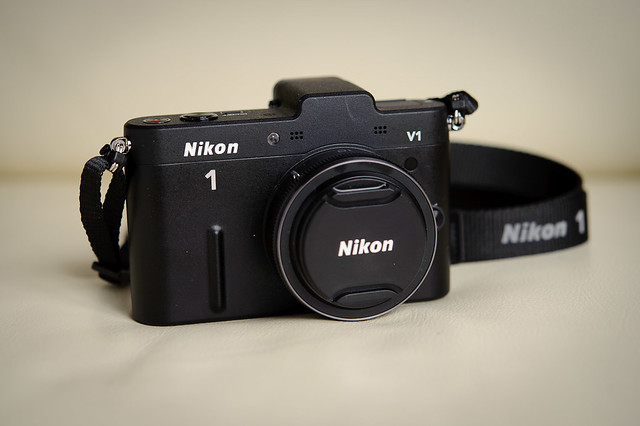
The Nikon V1

Nikon 1 V1

This is the first in a series of posts about the Nikon V1. See the bottom of this post for links to more articles about the V1.

Like a lot of people, I was disappointed when the Nikon 1-series was announced. The cause of my deflation was the size of the new camera’s sensor; the new “CX” format seemed to be a clear step in the wrong direction.

Given the heat in the small mirrorless camera space, I figured that I’d just wait for the next thing to come along. I’d already bought and returned the camera in this space the Internet seemed to rave over: the Fuji X100. While its viewfinder was great—and a good viewfinder is now a requirement for any new small camera I purchase—the autofocus leaned just too far on the “miss” side of hit-and-miss for me, the father of a three-year-old. Not to mention that I do want my “small” camera to be at least reasonably capable on a mountain bike ride.

Still, I read reviews of the Nikon 1—the larger, more capable V1 in particular—that said a few intriguing things. First was that the image quality was better than one would think such a small sensor capable of. Second, that the autofocus and metering were top-notch (see above for why that’s high on my list). Those things, plus some other things like a bevy of interesting accessories (a small GPS module; a tiny Speedlight; an adapter to mount Nikkor lenses), a solid build and a good viewfinder, had me thinking this might be worth checking out.

So I ordered one. I got the V1 kit with the standard lens, a 10-30mm unit with a typical slow speed. The kit I ordered also included the lens I was really interested in, the 10mm f/2.8 pancake. I’m going to break my impressions of the camera down and make several posts about it, mostly so this doesn’t become a book-length post that I never finish or publish.

Some items that may or may not be interesting in the way of context, other than what I’ve already laid out, in no specific order:

  • I’m a Nikon shooter. My main camera is a D700 with some great Nikkor glass that I adore. I’ve shot Nikon since college, but started with Minolta and had a 2-year-long dalliance with Canon, when I was disillusioned with Nikon’s slow pace making good digital cameras. So, I’m a Nikon guy, but my allegiance is not unshakable, nor is it paid-for; I buy everything I play with.
  • My current small camera is a Panasonic GF1, and the only lens I have for it is the wonderful 20mm f/1.7 pancake. It’s a great setup, save for the fact that I end up shooting it with the camera out in front of me, which I hate. I have the optional viewfinder, but it’s just not good enough, now that there are better options on the market. After buying this camera, I swore I’d not buy another without a good viewfinder.
  • Mountain biking affords plenty of action opportunities, but even more nature shots. I want my small camera to react quickly but to also be capable of capturing a beautiful vista with high-quality. I’ve recently taken to printing my photos again, so I’m interested in resolution for that purpose. That said, I’ve made some great prints of images from my 8 MP Canon camera and also from my GF1, so I’m perfectly happy with lower resolution as long as the pixels are quality pixels.
  • I want a camera that I can carry everywhere, or at least almost everywhere. That’s why I don’t just use my D700 for everything.
  • Low-light performance is important, but if I can get good ISO 1600, I’m set. I can probably live with good 800 and passable 1600, based on my time with the Panasonic. Noise-reduction software is good enough that I’m willing to lean on it if necessary. Of course, I’d love to have it all….

Alright, enough of that. On to some first impressions:

The V1 feels good in the hand, right out of the box. It’s small, but not crazy small. It fits my hands well enough, although a grip of some sort would be welcome; I had the same feeling about the GF1. Still, the V1 feels good. It uses a surprisingly big battery; I’d guess it’s 1/4 or more of the camera’s interior space, and it lends considerably to the weight of the whole package. It’s supposed to provide 400-or-so shots-per-charge, which I’ve found to be reasonable, if not on the low side. (I’ve done better than that on average over more than a week of shooting.)

The lenses are tiny. Most reviews I’ve read make the point that they’re not that much smaller than Micro Four-Thirds lenses, but they seem smaller and lighter to me in general. I only have the 20mm Panny in the M43 mount, and it’s a small lens for sure. But the Nikkors seem both lighter and smaller in the hand. They’re plastic, but have metal mounts, and are not at all cheap feeling. The zoom has VR as well, but really needs it, being a slow lens.

The viewfinder is good. I’d say that its quality is up there with the best in the field, although I’ve only tried most of the competition for a short time in the store. The Sony NEX accessory viewfinder has more resolution, but doesn’t really have much of an overall edge. The Olympus PEN E-P3′s external unit is probably better quality, but it is huge and doesn’t have the eye sensor that switches to the viewfinder automatically when you pull the camera to the eye like the Nikon, so I’m hesitant to call it better overall. The Fuji X100′s killer OVF/EVF combo is the clear market leader here. I’d say that the important point is that it feels natural to pick the V1 up to my eye and shoot, which I can’t say about a lot of small cameras I’ve used, and that’s a huge, huge selling point for me. This camera feels natural in the hands and at the eye.

The autofocus and metering are as excellent as I’d read. The V1 has no problem keeping up with my three-year-old, who never seems to stop moving and definitely doesn’t when she knows I want a picture of her. I haven’t gotten out for any action shots of bikes yet, though. I’d say that in good light, the V1 doesn’t seems that far behind my D700, and that’s saying a lot. It’s clearly better at autofocusing in good light than any other small camera I’ve tried, including the current Panasonic, Olympus and Sony models. Once the light gets dim, I’d say it’s still better than those, but not by nearly as much. Overall, I get an excellent rate of “keepers” from the V1′s AF system, based on the subject being in focus.

One major annoyance that is immediately apparent is that you can’t turn off image review after shooting a picture. I’m really, really hoping for a firmware update that fixes this, because it does hamper tracking a moving subject while shooting.

I’ve ruled out several small cameras before the V1, for various reasons, including: the Fuji X100 and its smaller sibling the X10; the Panasonic G3; the Sony NEX-5; the Olympus PEN E-P3. I’ve been looking forward to the Sony NEX-7, which I think might be the only contender left at the moment, based purely on previews on the Internet since no store near me has one, nor does anyone I know. I’m intrigued by the huge sensor and available quality optics, like the 24mm Zeiss. I’m put off by reports of lackluster AF and the overall size of the package with a lens attached. But I need to get my hands on one to make a real decision.

I’ve been shooting a lot with the V1 in the last week. I’ll post images and more thoughts in the coming days. Let me know if there’s some aspect of the camera or system you’re particularly interested in.

More Posts on the V1

More on Steve Jobs

The outpouring of stories and reactions to Steve Jobs’ death has been pretty amazing, in my opinion. There have been a few stand-outs that I want to share. One funny thing about a lot of them, and my own post on the matter, is how many of them have a disclaimer that they didn’t know Jobs, and most hadn’t even ever met him. Amazing that so many would have such strong reactions to the passing of a man they had so little actual connection with. In any case, I can relate.

Tim Berners-Lee, one of the people who created the technologies that made the internet possible, has a fitting story. Basically, he wrote the first web browser, WorldWideWeb, and the first web server, CERN httpd, on a NeXT machine. The NeXTStep OS on that machine is a predecessor to modern Mac OS X, of course.

Stephen Colbert’s tribute on his show, The Colbert Report, was particularly touching in that it was touching, funny and sad, all in the same three-plus minutes.

The Colbert Report Get More: Colbert Report Full Episodes,Political Humor & Satire Blog,Video Archive

The Online Photographer has a good set of links for those interested in further reading.

Perhaps the most fascinating to me is the story by Christopher Bonanos for The New York Times, “The Man Who Inspired Steve Jobs”. What a wonderful tale, which I hadn’t heard before.

iPhone Screen Size

I have some friends who think Apple made a mistake in not updating the iPhone’s form factor this revision, to increase its screen’s size. I disagree, and the usual suspects who blog about Apple said a couple things on the subject I completely agree with.

Marco Arment is up first:

As a four-year iPhone user, I’ve never thought, “You know what I don’t like about this phone? The screen’s too small. I’d like to reduce my battery life, and I’d like my phone to protrude from my pocket in a larger and more conspicuous rectangle, to achieve a larger screen that I cannot comfortably use one-handed. That would be completely worth it.”

Amen, brother. If I want to work on a bigger screen, I’ve got an iPad or laptop. I want my phone to be my most portable device, with good battery life. There’s a limit to how small I’d want to go, and I think the current iPhone form factor is pretty damn great.

Marco’s article linked to one from John Gruber, who has another quote I think hits the nail on its proverbial head:

If you value tech specs over practical real-world battery life, if you would like to choose from a variety of screen sizes ranging from 3-4.5 inches, if you would prefer a thicker bulkier form factor to accomodate large LTE chips and a bigger battery to power said LTE chips, then the iPhone is not and never will be the phone for you. And, lucky for you, there’s another platform, Android, that offers you everything you want.

I think that’s true, and I’ve made two distinct efforts to own an Android device, and both times came back to the iPhone. Not because the hardware was not up to snuff for the most part, but because the software wasn’t as refined as iOS. And my last attempt was Google’s then-flagship Nexus One and my iPhone was still the 3 GS.

So, yes, if a bigger screen is more important to you than the best OS, we will have to agree to disagree. There’s more to life than stats and specs. In the meantime, I’m happy today that a new 64 GB iPhone 4 S is on its way, and I’m so looking forward to getting rid of my long-in-the-tooth 3 GS.

Steve Jobs 1955-2011

It’s been a rough day in Cupertino, where I work. It started out with a gunman killing three people and hurting seven others (so far; he’s still on the loose as I write this.) Then in the afternoon, word came that Steve Jobs died. I never did more than stand near the man, but I’ve been a fan of Apple and its products for many years. I hope he, and the others who were killed today, rest in peace.

Retiring The Daily Shoot

I was bummed to read that tomorrow’s assignment will be The Daily Shoot’s last. While I’ve only shot 18 assignments, I enjoyed watching other people do assignments. Funny enough, I was planning on picking up and doing some assignments next week with a new camera I just acquired, the Fuji X100. (I’m sure I’ll post about that separately, once I have more than an initial impression.)

In any case, it was fun while it lasted, and I appreciate the work that went into creating and maintaining it.

Here’s How to Respond to Netflix: Cancel Streaming

As anyone with an internet connection knows, Netflix recently raised its prices by an effective 60%. I keep seeing comments about how people are going to “get back at them” by canceling their disc rental plan when the new pricing takes effect. Guess what? That’s what they want you to do. They want to close that part of the business down, so they can be an internet company. No more distribution centers, labor-intensive mailings or physical media.

Personally, I like Netflix’s streaming service, but I like high-quality HD more. I’ll put up with streaming for an old TV show, but I want to watch new content in HD, preferably in the highest quality available, which means Blu-ray. So, if I can only keep one of them, I’ll keep the discs, thanks. And you should too, if the message you want to send is that the streaming catalog and quality aren’t good enough to justify this move yet. If you really want to flip them the bird, cancel the whole shebang, I guess.

Canceling your discs is rewarding their current actions.

Livestrong Challenge Davis 2011

I participated in the Livestrong Challenge in Davis yesterday, and it was a well-run event. I did the 70-mile bike ride.

As you can see, it was a pretty flat ride, compared with the previous two years in San Jose. It was also much nicer weather, with the San Jose rides being very, very hot. This year was very pleasant, only getting into the 80s around noon. We finished much faster as a result; I finished with an 18.4 MPH average speed compared with around 13 in previous years.

I rode with Shane this year, and this kind of ride is definitely his strength. He kept our pace high, and we made excellent time through the first half of the course. Unfortunately, we didn’t get to eat breakfast before the ride, and I started to bonk a bit about then. I ate everything in sight at the 35-mile “power station”, filled my pockets with food and kept eating on the bike. I couldn’t keep pace with Shane after a few more miles, so I settled into a pace that I was sure would get me to the finish line. One more power station and food about 55 miles in, and I started feeling better. I managed to hook up with a couple of riders who were keeping a better pace than I’d been doing on my own, and one I could contribute to. We rode into the finish about noon.

Shane did really well, coming in second of all the 70-mile participants and a fast average speed of 19.5 MPH. Very nice!

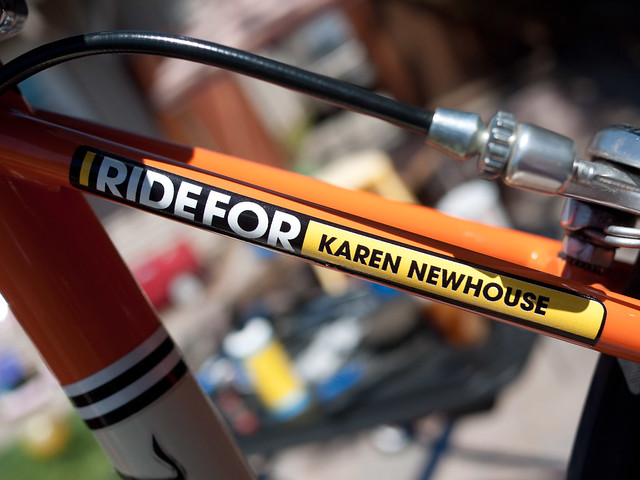
“I Ride For Karen Newhouse”

Thanks a ton to the people who sponsored me this year. The year since the last Challenge has been a bad one for our family regarding cancer; Val’s mom was diagnosed with a recurrence, and has been fighting it hard. Hopefully the donations that events like this one raise will turn into real cures someday.

Riding at Fremont Older

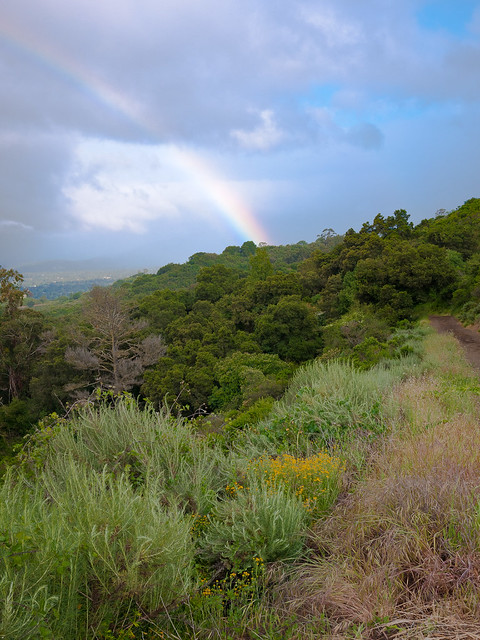
Ride After Rain

I’ve now done a few rides at Fremont Older OSP, which is nearby my new-ish office. It’s one of those places that’s not a mountain biking destination, but its proximity to home and work make it a great place to ride in the middle of the week. It tends to be popular for that reason, with trail users of all kinds. Horse riding seems to happen earlier in the day than I get there, and I’m sure that’s by design. Fremont Older has nice vistas of the Silicon Valley. It’s got a couple nice singletracks, notably the Seven Springs Trail and the Toyon Trail. It’s got a spot on my regular ride rotation now.

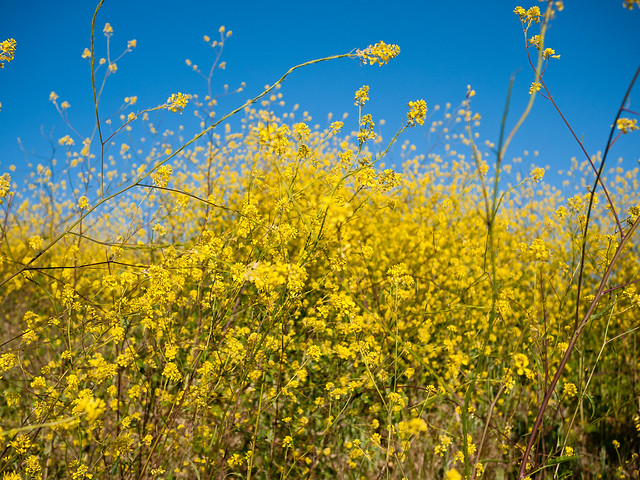
Yellow

RIP Elisabeth Sladen

I was saddened to read that Doctor Who’s Sarah Jane Smith, actress Elisabeth Sladen, died of cancer this morning. Sarah Jane was the Doctor’s companion when I was first introduced to the show as a kid, and she’ll always have a special place in the series to me. I was pleased to see her return to the show in recent years.