Todd Haselton, writing at The Verge:
The new chip also renders 10 percent more viewable pixels. This doesn’t mean there are more pixels on the displays — those are the same — it’s that the chip can show more of them to your eyes at once. This is part of the foveated rendering used by headsets like the Vision Pro. The pixels that your eyes are focused on are sharp, while the system seamlessly reduces the quality in your periphery. Text on sites and in apps is sharper as a result, but it wasn’t such a dramatic change that I could pick it out.
This reminds me a bit of the original iPhone, in a way. If you don’t remember, the original iPhone didn’t have the horsepower to scroll the entire screen smoothly, but they wanted that fluid feel. So, it rendered the off-screen portions of whatever you were on, like a webpage, as a grid. And as you scrolled, it moved fluidly, but that grid gave you a sense of how far you’d moved. As soon as you stopped, the content would render appropriately. It felt great, though not as great as being able to actually pan the whole page, of course. I think we’re finding that foveated rendering on the Vision Pro is a less intrusive version of that same kind of thing. It’s a workaround that Apple would rather not do—they’re telegraphing that they’d rather be able to move the whole thing at full resolution—but it’s a worthy way to give an approximation of the ideal sensation. Now that they have more horsepower, courtesy of the M5, they’re rendering more of it at 100%.
(Heck, for that matter the Mac did a similar thing early on: Windows used to turn to an outline while being dragged, and only rendered in full once placed. As soon as the Mac had the power, the windows render as we’re used to now—with full fidelity.)
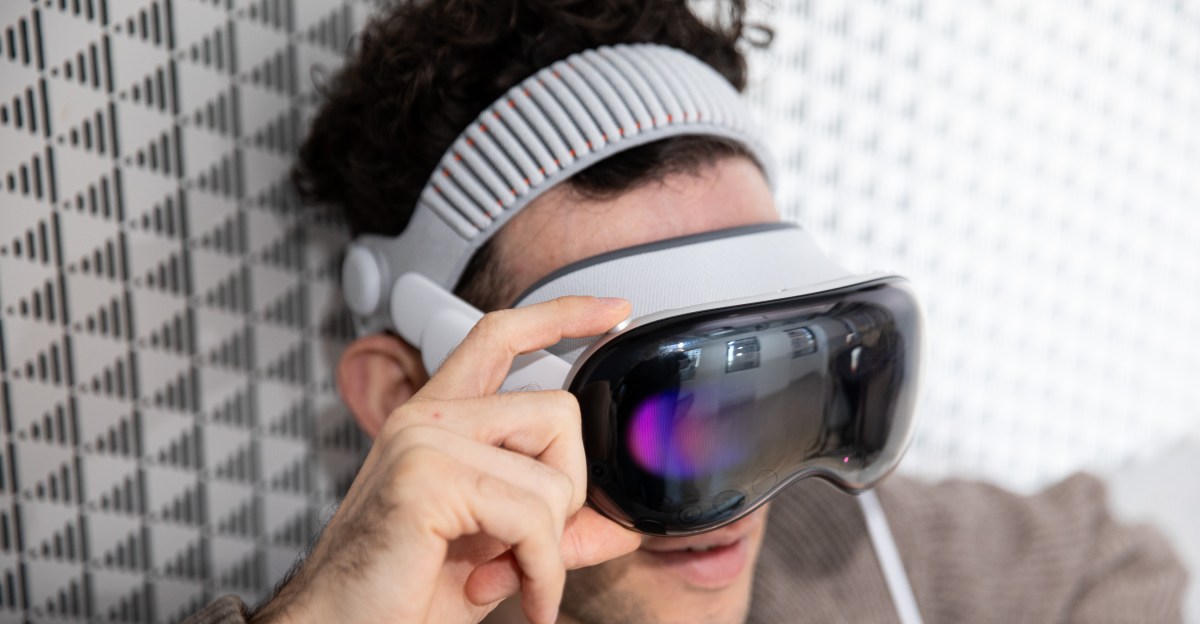
Apple’s new Vision Pro is better than the first, but still lonely
The new headband is nice! And, at $99, you should buy it if you have the first Vision Pro model.