★★☆☆☆
tl;dr: If you’re a deep fan of the MCU and have seen all the movies, I think this movie is downright good. If you—or someone you want to go with—is a more casual fan, I think this movie is likely going to be a miss.
Going in to this movie, my biggest worry was that Sam Wilson FKA The Falcon, would not be able to transcend his sidekick stature and really take on the mantle of Captain America. Relatedly, I worried that Cap actor Anthony Mackie would not have the gravitas to pull it off. I am very happy to report that this was not a problem at all. Both Wilson and Mackie pull it off with aplomb. Sam comes across as having the right values, temperament, empathy, and yes, gravitas to lead the movie.
What I didn’t expect, was for this movie to be so nerdcore. One of the reasons I give this movie two stars is that, as my ratings legend says, two stars is for something that is “worth it if you’re into the genre”, and I think you really do have to be “into the genre”, and have followed it pretty closely, to get everything this movie has to offer. For example, I saw this with my daughter, who has grown up with these movies, and has seen most of them, and I think has a better grasp of the history and characters of the MCU than most normal fans, and she didn’t understand where a lot of what happens in this movie came from. If you fall into the camp of someone who really follows the MCU, I’d call it better than the “average” that my two star ratings usually connote—let’s call it “good” in that case.
I think that’s probably enough to give you a sense of whether or not this movie’s for you. If you want more detail…
Spoilers follow
Here’s the big issue: this movie is, in a lot more ways than I’d have ever guessed, a sequel to 2008′s The Incredible Hulk (★★☆☆☆). Yes, you read that right. Many fans won’t even know that The Incredible Hulk—the one that starred Edward Norton as Bruce Banner—was the first MCU movie. Yes, Thaddeus “Thunderbolt” Ross has been in several MCU movies, but I bet if you asked most normies, they’d have no idea that he was introduced in that original movie. They won’t remember that Bruce Banner—at least not the one they know (played by Mark Ruffalo)—was Thunderbolt Ross’s daughter Betty’s serious boyfriend before all the Hulk stuff happened to him. And they double-extra won’t follow that Harrison Ford now plays the same Ross guy who was a pretty minor character in the MCU all this time.
The movie spends some effort (and some downright silly exposition) to try and explain it, but I still don’t think casual fans are going to follow who he is nor his relationship to Banner—who inexplicably isn’t in the movie, despite being central to so many of the things that happened in the lead-up to it. There are lines about how Ross locked Sam (and many other heroes) up and put others the on the run (as part of the effects of the Sokovia Accords in Captain America: Civil War (★★★☆☆), but I still think a lot of people aren’t going to remember that stuff, or won’t connect that Ford is the guy who did it. (RIP William Hurt, who played Ross in those movies.)
OK, so the president is now Harrison Ford, who we should know, who has pictures of Liv Tyler on his desk (and we should know why…she played Betty Ross back in 2008), and Cap doesn’t trust him for some reason. Fine. Let’s move on.
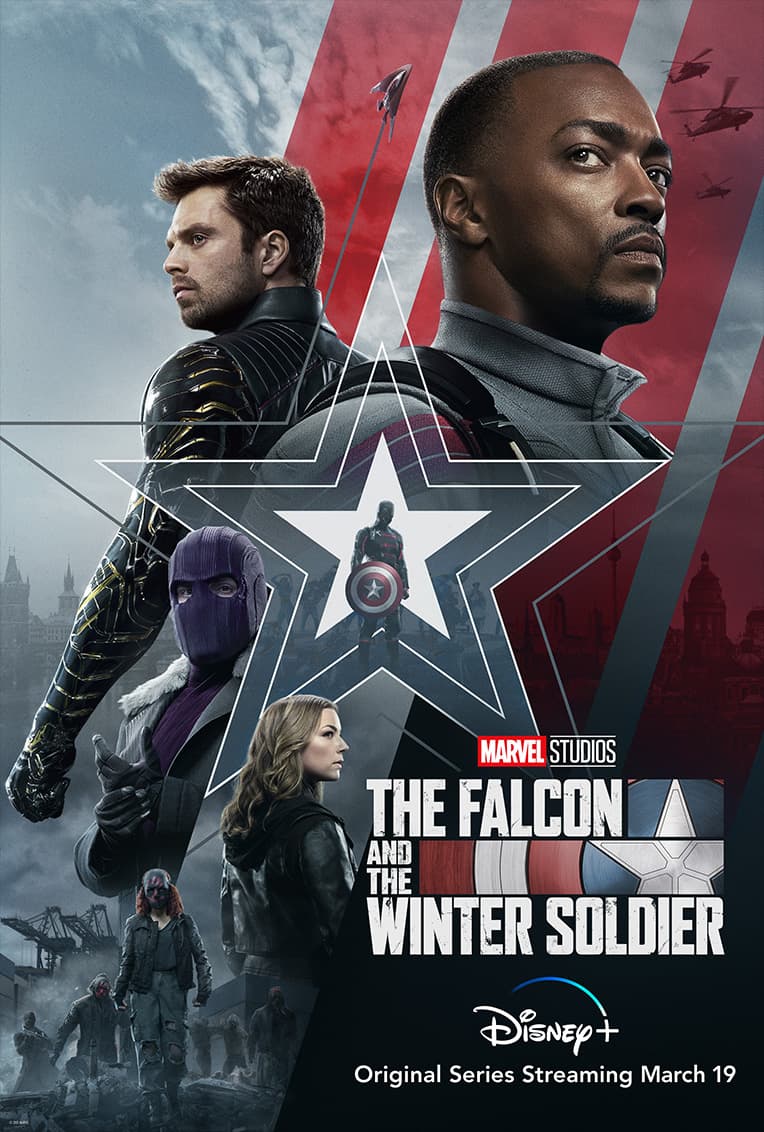
You also should know about the happenings in The Falcon and The Winter Soldier (TFATWS from here on out, ★★☆☆☆), although not as much as the Hulk movie. Mainly, it helps to know that Falcon is now Cap, and that he also befriended a Black former Super Soldier named Isaiah Bradley, because Isaiah features prominently in this movie. And Isaiah was one of the best parts of TFATWS and that continues in this movie. Isaiah’s history as a Super Soldier contrasts strongly with that of Steve Rogers, and his relationship with Sam continues to be a strong story arc.
The normies are not going to have seen The Eternals (★☆☆☆☆), and probably aren’t going to understand why there’s a giant head and hand sticking out of the Indian Ocean, now referred to as “Celestial Island”. I do pay attention to these movies, and did watch The Eternals, and still don’t know how people knew that thing is a Celestial—all the players who knew that died or left the planet at the end of that one, as far as I remember. Anyway, it turns out that the body of that Celestial contains a new element that will be familiar to fans of the comics: adamantium.
When is this movie supposed to take place relative to Secret Invasion (★☆☆☆☆), in which world leaders are killed, the world finds out that aliens have been living among us, and all kinds of crazy shit happens? Ross isn’t president in that one, but we clearly don’t see the enormous disruption to the world’s politics that must follow that series in Brave New World. However, we see the White House and Washington Monument intact and apparently normal in Secret Invasion, but they’re destroyed in Brave New World. It feels like the broader continuity on Earth is a mess.
After all this, I haven’t even touched on the antagonist of this movie! That’s Samuel Sterns, who was the scientist that Bruce Banner was communicating with in The Incredible Hulk, who was helping him to find a cure (remember, Mr. Blue and Mr. Green?). You might remember that he had some Hulk blood drip on his head, which then started visibly warping and throbbing. Well, as fans of the comics know, Samuel Sterns is the real name of the classic Hulk villain known as The Leader, although he’s never called that in this movie. He doesn’t look much like The Leader either, and in fact looks pretty lame. (My daughter knows The Leader well from a solid turn in The Avengers: Earth’s Mightiest Heroes, but didn’t connect that this was a version of that character.) There’s a fine story about how Ross blamed the outcome of The Incredible Hulk on Sterns, locked him up in a secret base, and used Sterns’s newfound intellect to help him climb all the way to the presidency, only to find that that’s not all Sterns was up to.
OK, so if we could have had a “previously on” preview at the start of this movie, it would have featured scenes from: TFATWS, Captain America: Civil War, The Eternals, and a whole bunch from The Incredible Hulk. That’s a lot to expect people to remember without some kind of briefing!
All that said, I really enjoyed most of the movie, but then again, I also liked TFATWS. The movie’s fights were excellent—Sam’s fighting style with the shield and wings is totally on point. I liked the new Falcon as someone who brought some humor to a fairly serious movie. I liked how visceral the scenes with Red Hulk (who is completely different than in the comics) were. I just wish the movie had been a bit more approachable for more people.